





The Chevy maintenance schedule in your manual lists all the services that will keep your vehicle in great shape. As your Chevy dealer, we want to tell you more about some of the services we offer.
Examples of Chevy Maintenance Schedule Services Available at Your Chevy Dealer
Oil Changes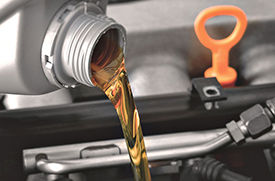
High-quality oil ensures top engine performance. Oil lubricates countless engine components, allowing them to move speedily and smoothly, while protecting them against wear and tear. The oil also contains specialized additives that break down potentially harmful buildups of carbon and other elements, protect against rust, and keep the engine clean.
The oil slowly thickens over time due to the accumulation of dirt and other debris absorbed in its passage through the engine. While much of this debris is removed by the oil filter, the oil quality will still drop and become less efficient. This increases friction damage for engine components and can cause even more serious problems. We replace the oil and install a new oil filter every 7,500 miles to keep the engine working at its best.
Battery Testing and Replacement
The battery stores electricity as chemical energy. When you press the start button, some of this energy is transferred to the starter in the form of an electrical charge. This powers the starter, which then cranks and starts the combustion process that powers your vehicle. Despite its importance, the battery has a short life of only three to five years.
A battery is usually replaced around 60,000 miles, but this can vary based on usage, exposure to extreme temperatures, and other factors. We can test your battery using our computerized battery tester. If your battery is healthy, we advise testing it again in one year. If it’s weak, we can install a replacement for you in minutes.
Brake Pad Replacement
Brake pads fit into the brake calipers, which are positioned above and behind the wheel rotors. Each pad has a 1/2″ thick rough material covering that produces friction when the pads are forced against the spinning rotors when you hit the brakes. The friction generated stops the wheels, but also causes their material coverings to wear thinner.
When the material thickness drops to 1/4″, the thinner material takes longer to generate friction, and your braking distance will increase. You’ll also hear high-pitched screeching from worn pads. Brake pads are replaced every 40,000 to 60,000 miles.
Book your Chevy service by contacting us at Jennings Chevrolet in Glenview, IL.
Connect with us


Recent Blog Entries
- Chevrolet EV Lineup for 2026: A Glimpse Into the Future of Driving
- The 2026 Chevy Colorado Trims: Find Your Perfect Fit
- 2026 Chevy Trax Trims: Find Your Perfect Match in Glenview, IL
- Everything You Need to Know About the 2026 Chevy Silverado 2500 HD
- Chevy Maintenance Schedule: Keeping Your Vehicle Reliable
Categories
- 2025 Chevy Blazer Glenview, IL
- 2025 Chevy Corvette E-Ray Glenview, IL
- 2025 Chevy Equinox EV Glenview, IL
- 2025 Chevy Equinox Glenview, IL
- 2025 Chevy Silverado 1500 Glenview, IL
- 2025 Chevy Silverado 2500 HD Glenview, IL
- 2025 Chevy Suburban Glenview, IL
- 2025 Chevy Tahoe Glenview, IL
- 2025 Chevy Trailblazer Glenview, IL
- 2025 Chevy Trax Glenview, IL